Some bottles are never sold. We built the house that entrusts them.
Croian & Hein holds the Swiss exclusive of a private collection of more than 1,000 references, from 1815 to 2024, assembled over a lifetime by a renowned winemaker who prefers not to be named. ZENIA took it from a trade price list to a complete luxury house: positioning, identity, a digital home built for collectors, a search engine made of the cellar itself, and the kit to sell it in person.
The asset was extraordinary. The market had never heard of it.
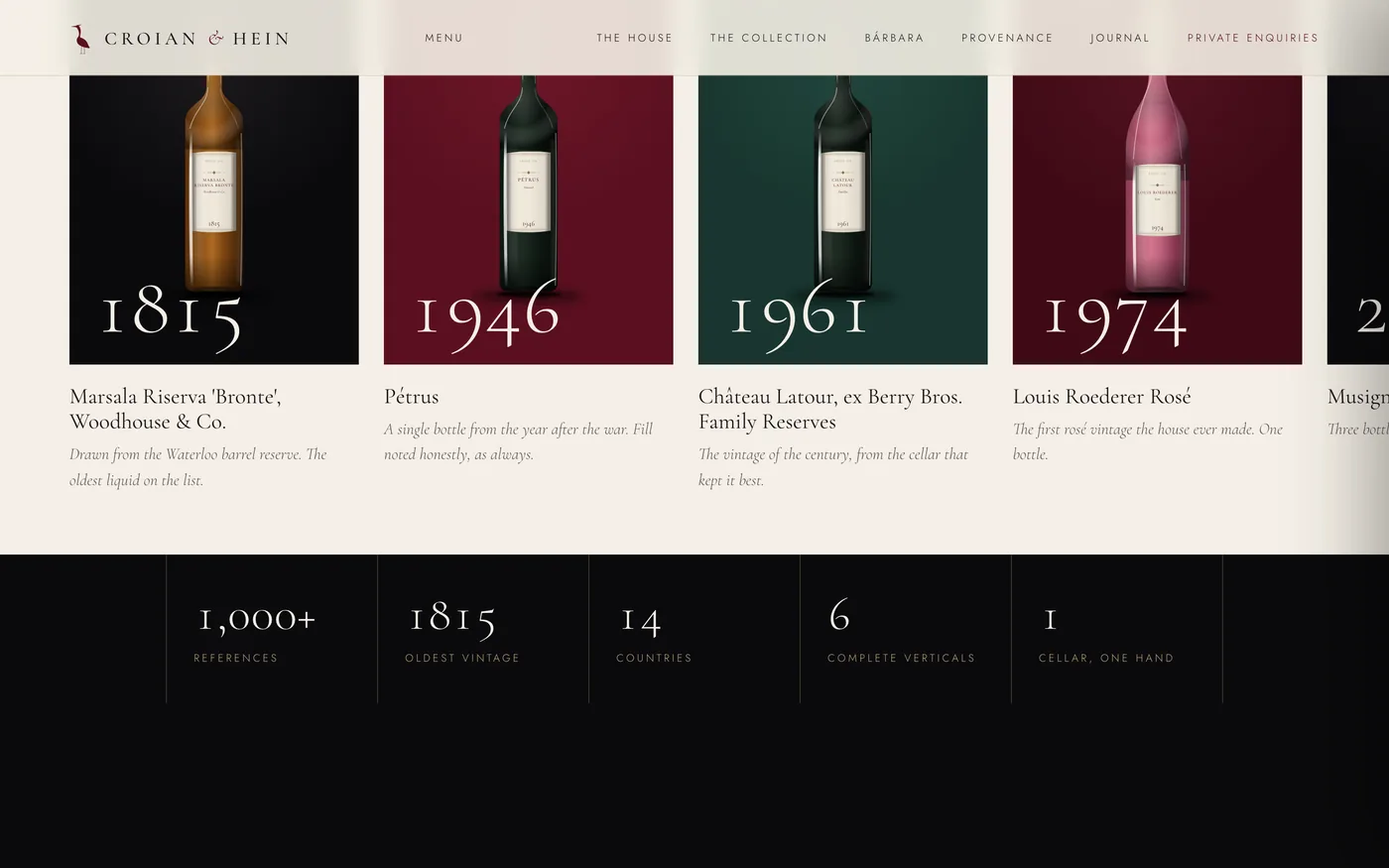
The collection existed as a dealer's price list: trade abbreviations, no stories, no brand. Pétrus 1946, a complete Sassicaia vertical from 1968 to 2022, a Marsala from the year of Waterloo, the first rosé Roederer ever released. Many of them the last bottle left.
The people who buy this (collectors, family offices, sommeliers of the best tables in Bern, Geneva and Zürich) never buy from a list. They buy trust, provenance and discretion. And the founder was flying to Switzerland days later.
No public prices, anywhere. Every bottle is quoted on request.
The owner of the collection is never named.
It had to feel like a house that has always existed, not a start-up.
The name had to stay open to objects beyond wine.
What we built
Not a website. A house, launched end to end.
Seven pieces, designed together and shipped as one launch.
01
Positioning
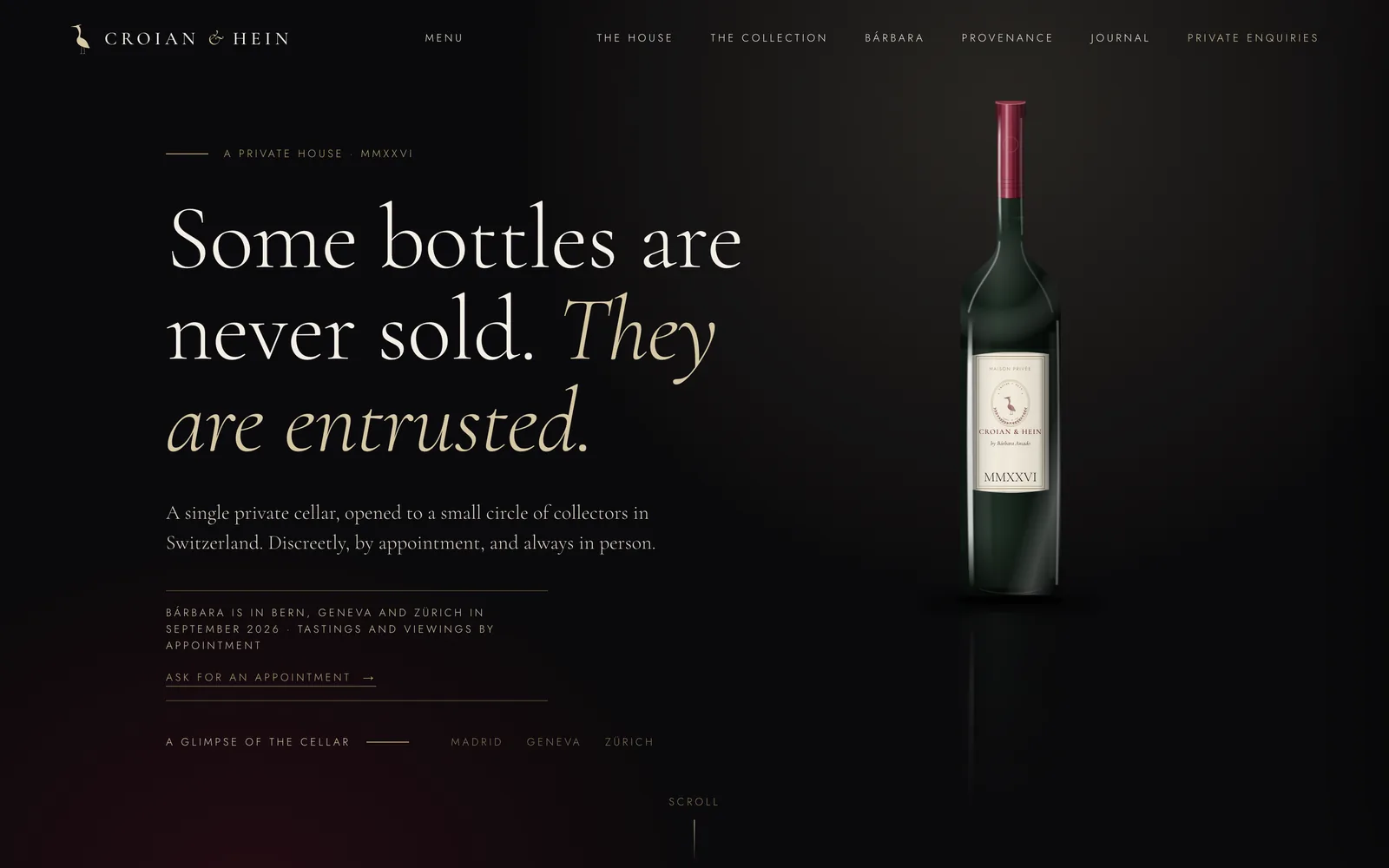
A private cellar opened by appointment, built on three words: discretion, provenance, placement. One line carries it: Some bottles are never sold. They are entrusted. Everything else follows from it, including what the house refuses to say.
02
An engraved identity
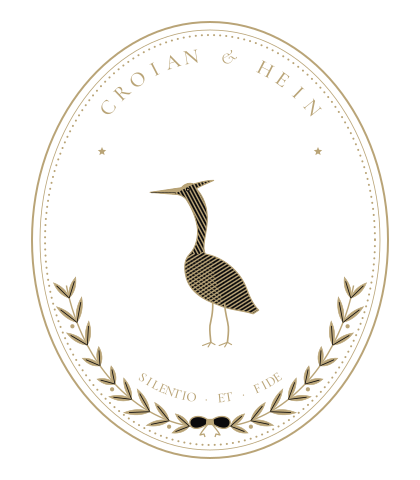
A heron crest drawn entirely in code: double pearled oval, a heron cut with burin hatching, knotted laurels and the motto Silentio et fide. Four colourways, a flat heron for small sizes, and a palette of ivory, universe black, bordeaux, wine green and champagne set in Cormorant Garamond and Jost.
IVORYUNIVERSEBORDEAUXWINE GREENCHAMPAGNE
The crest, the heron and the house palette.
03
The digital house
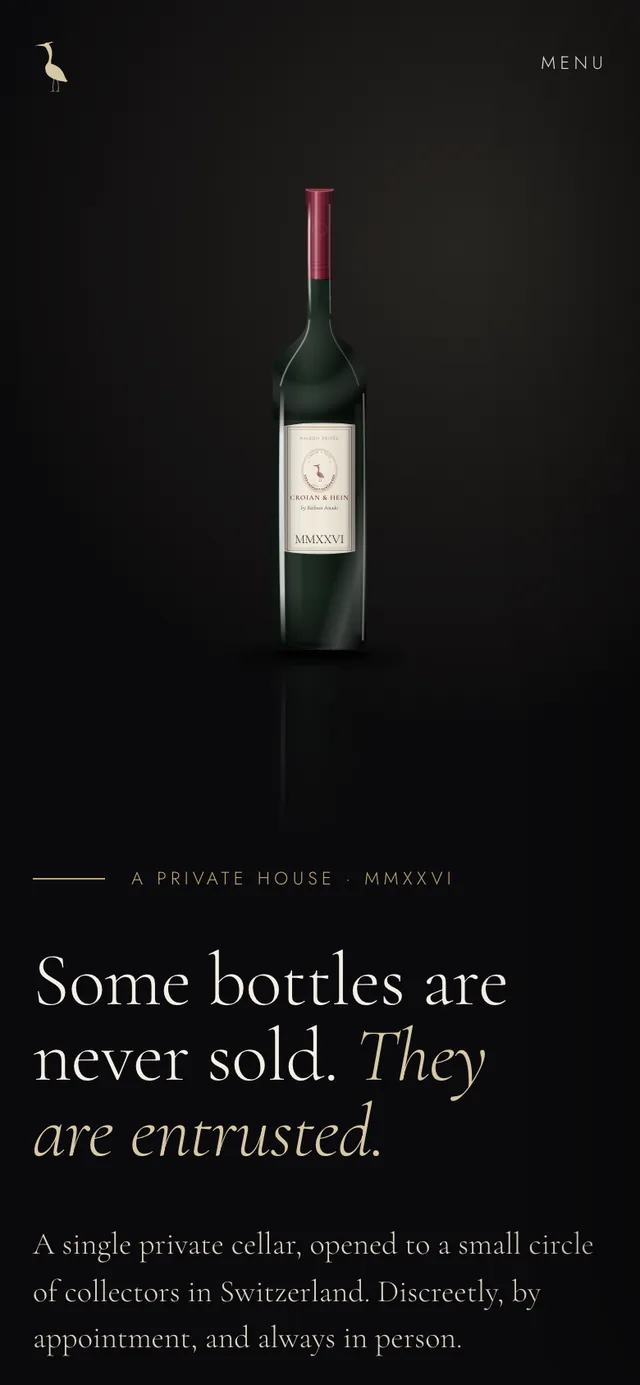
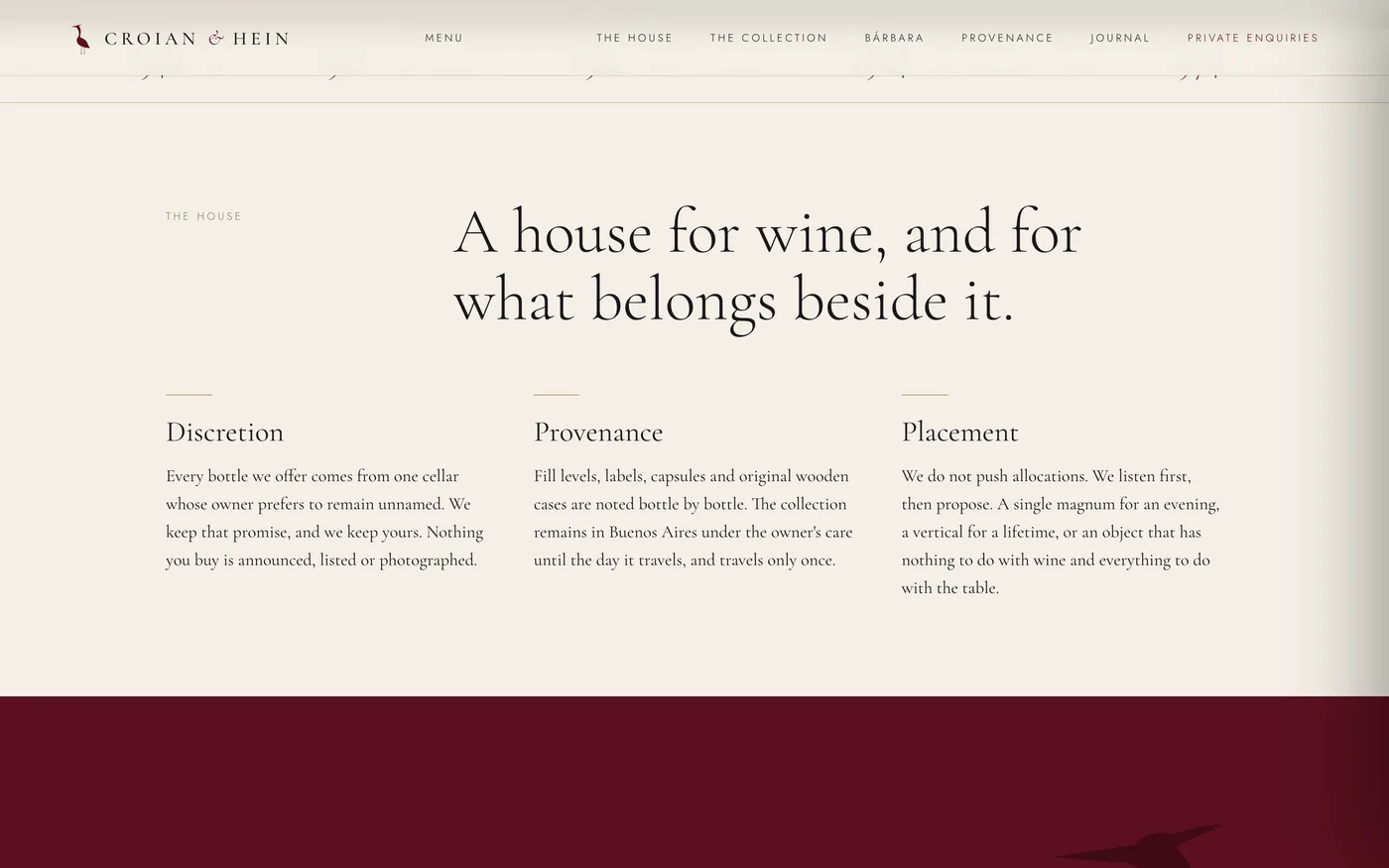
A full-screen opening where an illustrated bottle, rendered in code, turns to the light to reveal its label. Then the house, the manifesto, six bottles that explain the cellar, the collection by region with a sheet for every wine, the founder, provenance and a private enquiry. No third-party scripts, strict security headers, fast on any phone.
croianhein.com
croianhein.com
The house and six bottles that explain the cellar.
04
The cellar as a search engine
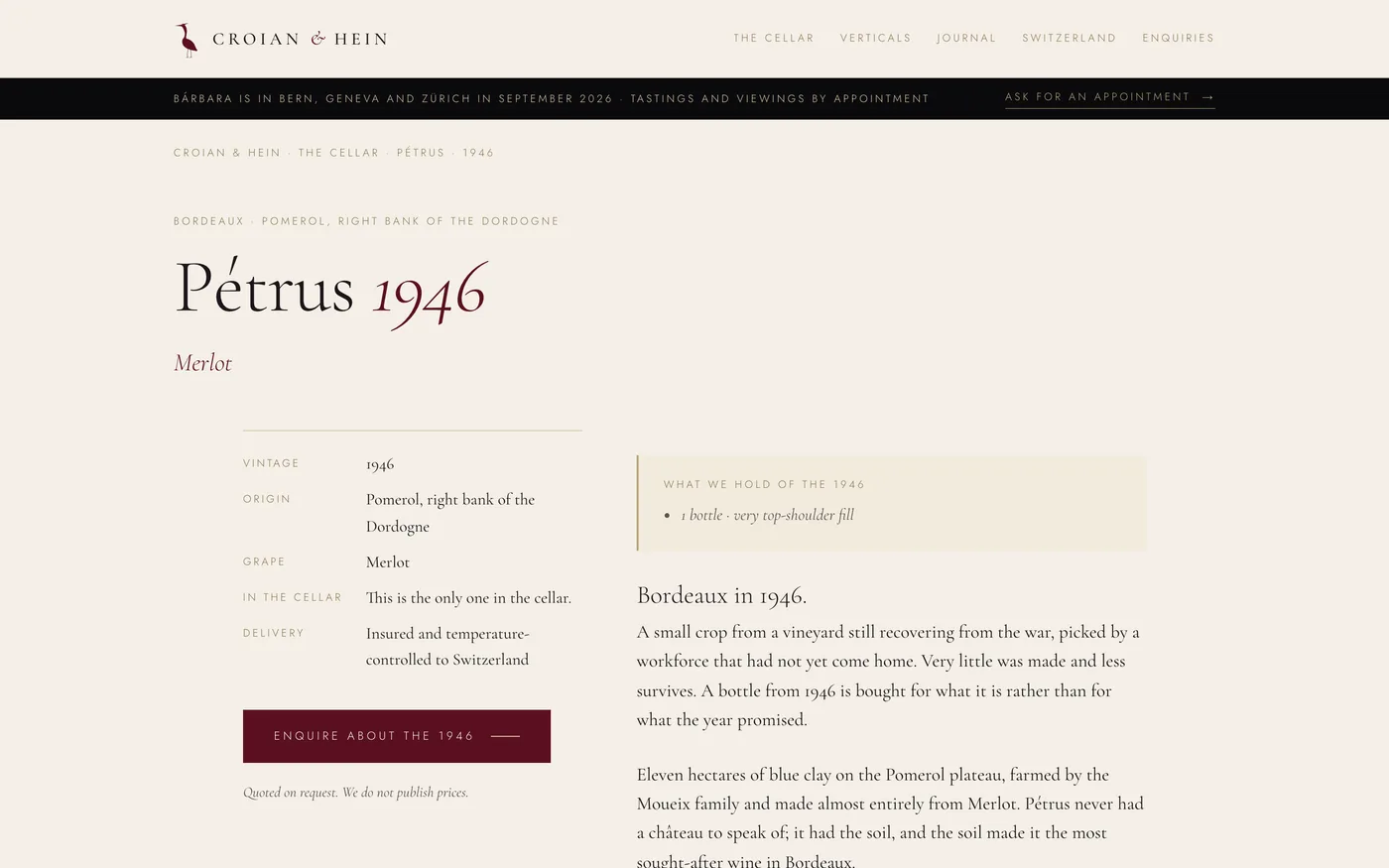
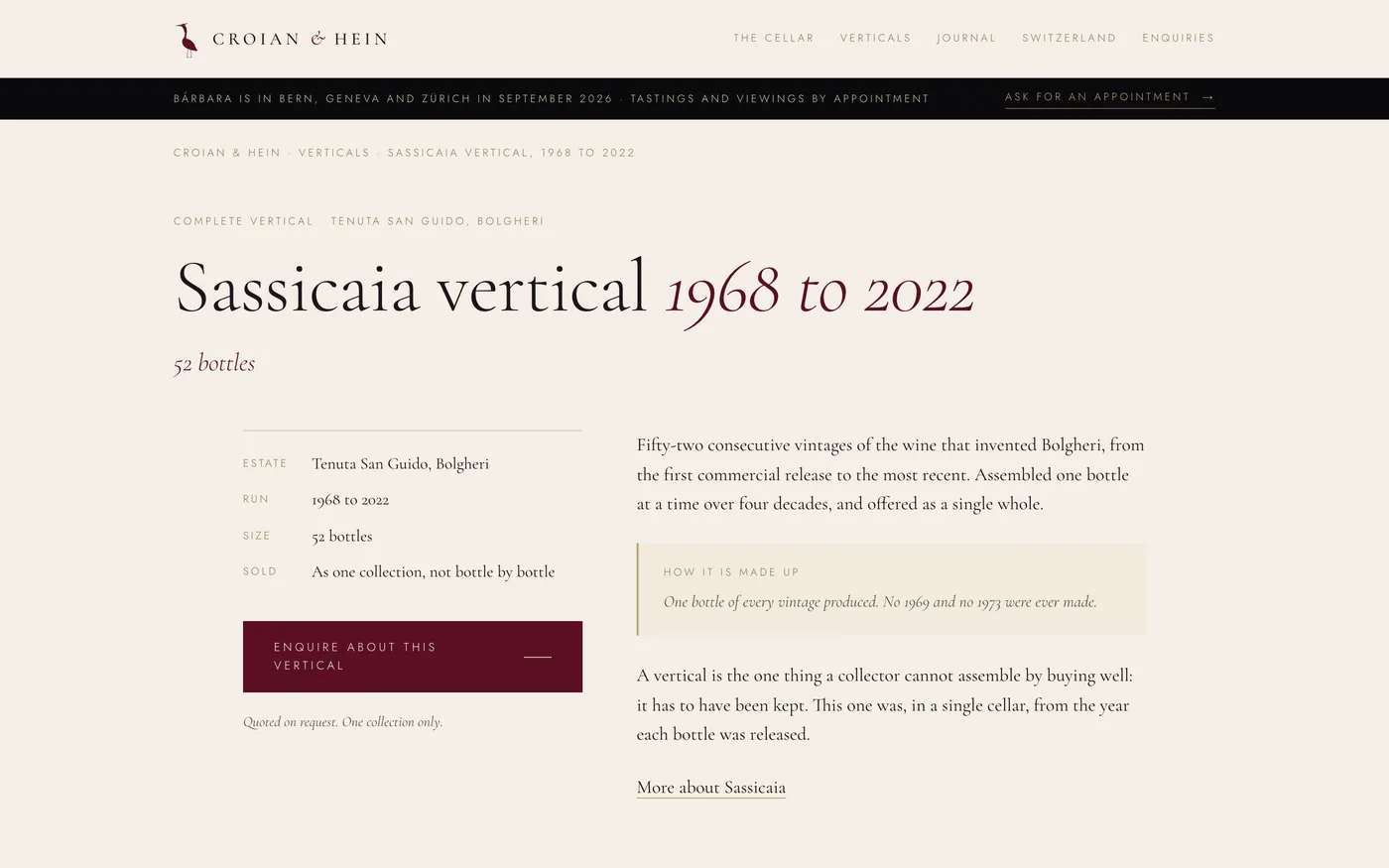
Collectors do not search for “rare wine”. They search for the exact bottle and vintage. We parsed the owner's list line by line and generated a page for every wine, a page for every vintage in stock and six complete verticals, each with format, bottles remaining and condition translated from trade shorthand. Four Swiss hubs (Switzerland, Geneva, Zürich, Lugano) cover delivery and customs in their own language.
croianhein.com/cellar/petrus/1946
croianhein.com/verticals
One page per vintage. Pétrus 1946 and the Sassicaia vertical, 1968 to 2022.
05
The Journal
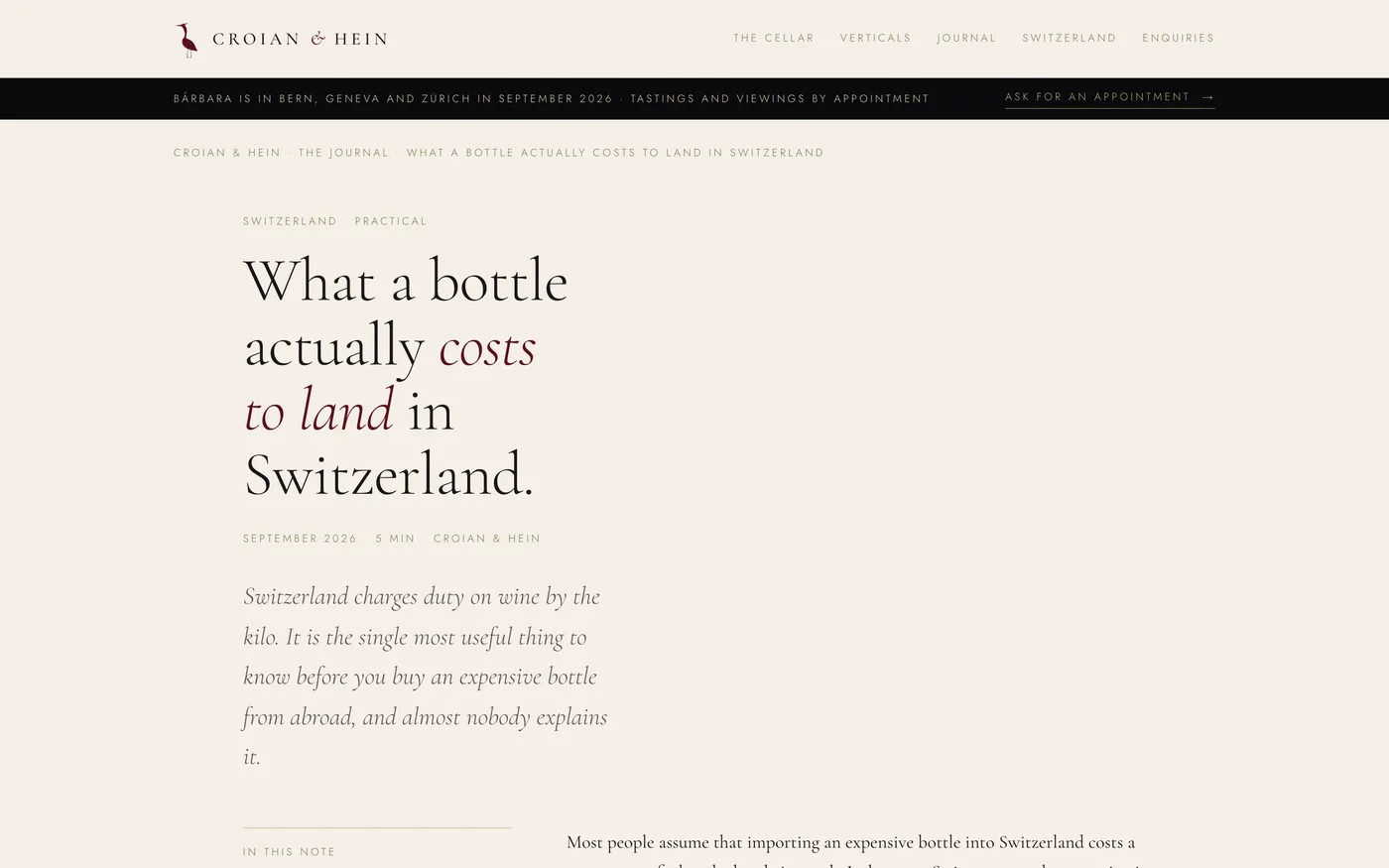
Twenty-three long-form pieces, more than 16,000 words, on what Swiss collectors actually ask: importing wine into Switzerland, bonded storage, selling a cellar, fill levels, provenance. The practical guides also in French and German. A weekly agent now reads real search data and writes the next one.
croianhein.com/journal
What a bottle actually costs to land in Switzerland.
06
Readable by AI
The whole inventory is published in machine-readable form (a site map for language models, the full cellar in text and JSON, product data on roughly 400 pages) and 24 AI crawlers are explicitly welcome. When someone asks an assistant who holds a 1961 Latour in Switzerland, the answer exists.
07
The kit for the room
Every page opens WhatsApp with the exact bottle already written, and tells the founder where the enquiry came from. Trade line sheets in four languages and two currencies, QR cards, a contact card, pages for sommeliers and a researched route of houses to visit in person.
Early signals
The first searches arriving are the thesis, word for word.
The house went live on 12 September 2026 and Google is still indexing it. The first organic queries to find it were not generic. They were exact bottles and vintages:
petrus 19461985 sassicaiadom perignon 1960masseto 2023
Deliverables
PositioningNaming rulesCrest and heronPalette and typeWebsite60 wine sheetsOne page per vintage6 verticalsSwiss city hubsJournalAI-readable inventoryWhatsApp with attributionLine sheets in 4 languagesSales routeWeekly content agent
Selling something rare? It deserves a house, not a listing.
Wine, watches, art or anything that is bought on trust: we build the brand, the digital house and the engine that brings the right buyers to it.
 Croian & Hein